NDIS Community Participation: Confidence & Independence
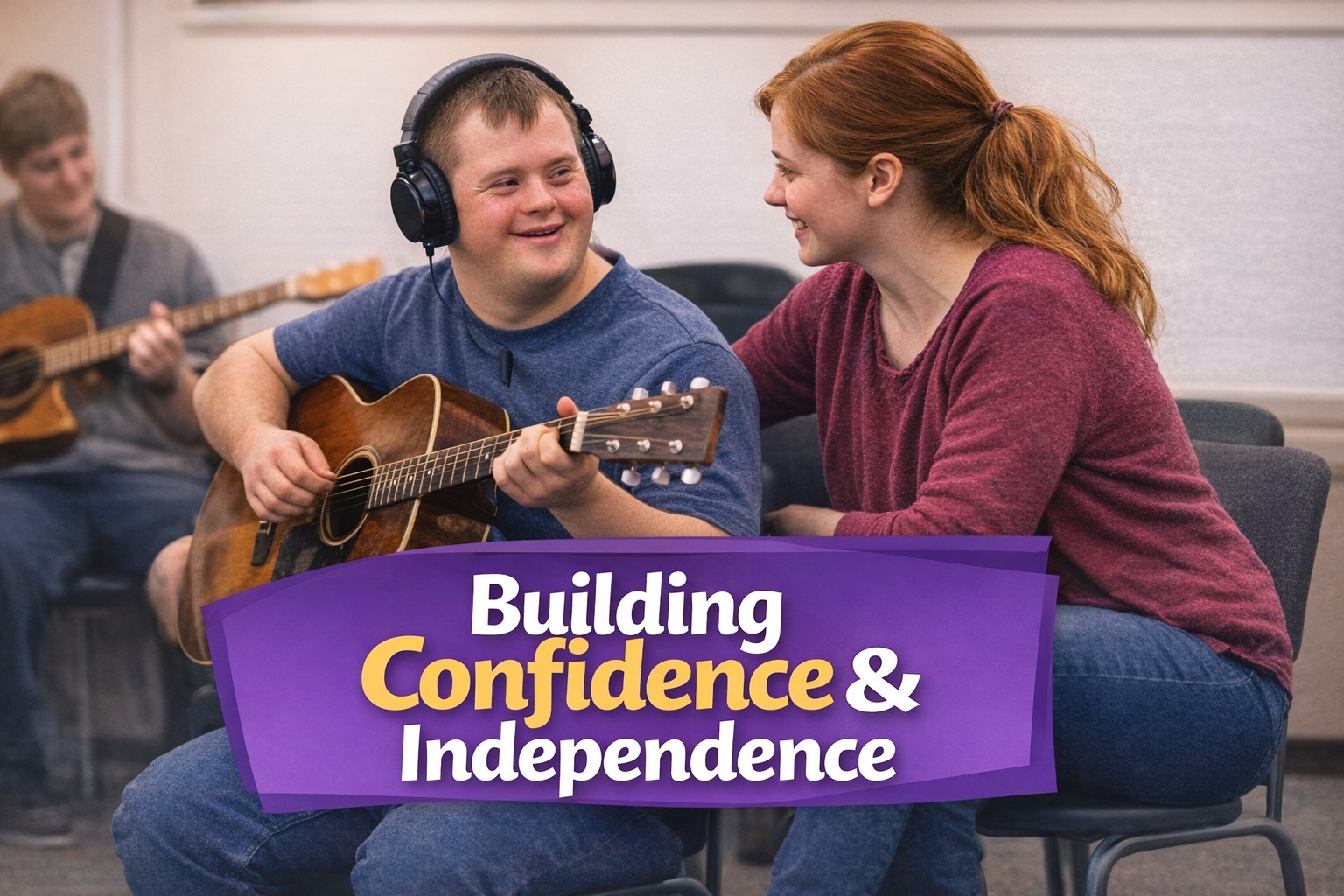
Small steps in the community can build confidence.
Feeling connected and having a place in your community matters. For many people with disability, it is easy to end up spending more time at home than you want to. Transport barriers, anxiety, access issues, and past experiences can all make getting out feel hard.
Community participation support helps make everyday life possible. It can mean meeting people, trying activities, practicing skills, and building routines outside the house. Confidence often grows from small, repeatable steps, not big leaps.
What “community participation” means in the NDIS:
In an NDIS plan, community participation usually shows up in two places: Core supports (help to take part in community and social activities now) and Capacity Building supports (support that builds skills over time).
Both can support goals like “feel more confident in community settings,” “build friendships,” “learn to use transport safely,” or “join a group activity each week.”
What the NDIS may fund (and what you usually pay for):
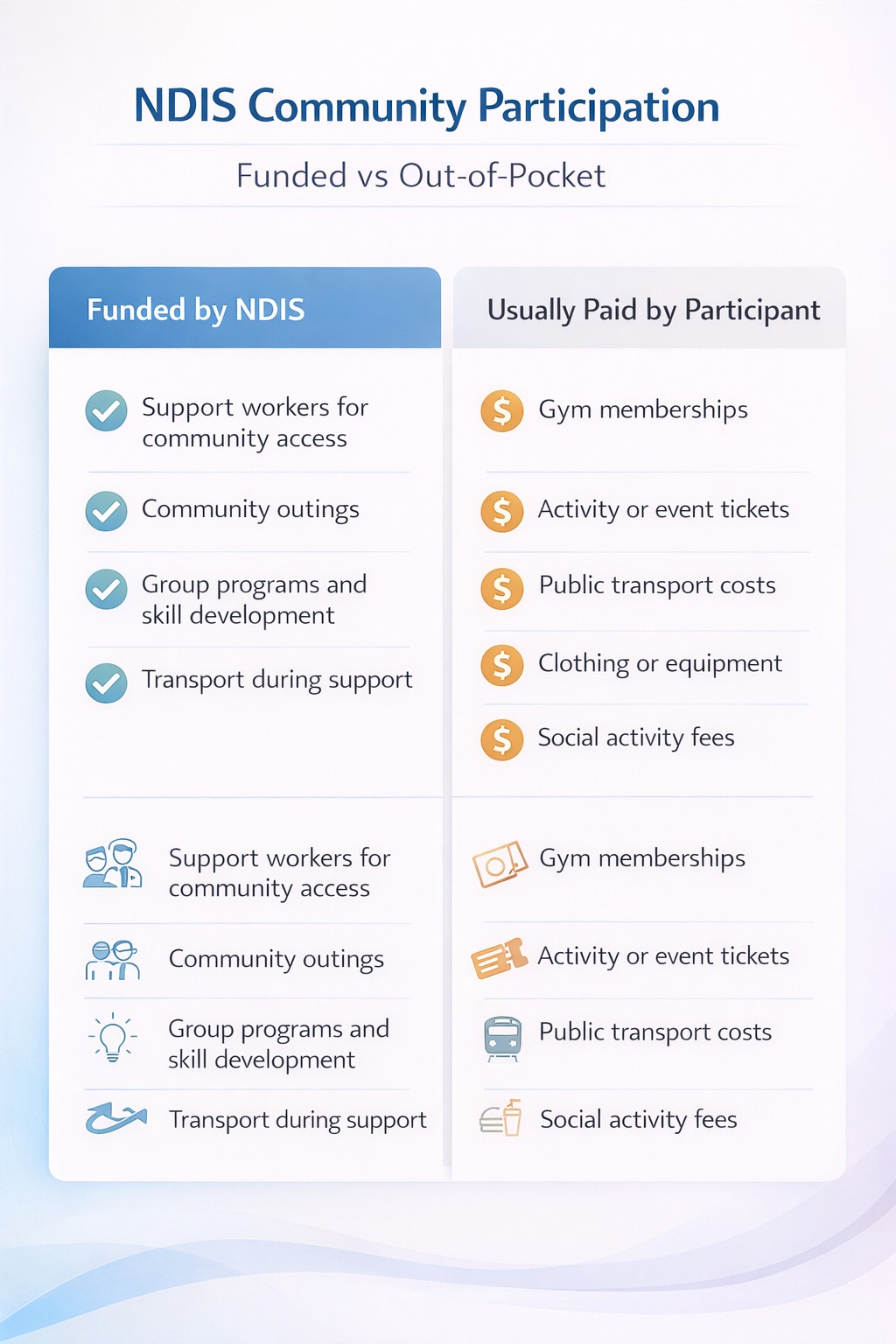
The NDIS usually funds the disability-related support that helps someone participate, such as support worker time or skill-building support. It does not usually pay the everyday cost that anyone would pay, like tickets, club memberships, entry fees, uniforms, or standard equipment.
There can be rare exceptions (sometimes called replacement supports). If you think something may be an exception, it is worth getting clear advice and written confirmation through the planning process.
NDIS funding also needs to meet the “reasonable and necessary” criteria. In practice, this means the support must be linked to disability needs and goals, be value for money, be likely to help, and not be something another system should provide or a general day-to-day cost.
Why participation builds confidence and independence:
Community life is one of the best places to practice the skills that support independence.
The WHO’s ICF is a widely used disability framework. It describes participation as involvement in life situations. When the environment is supportive and the right help is in place, people have more opportunities to participate, and those opportunities can help skills and confidence grow.
Confidence often increases through “I did it” experiences. These can be small: ordering a coffee and paying, saying hello to one new person, asking for help when you need it, practicing a travel routine, or staying at an activity for 15 minutes longer than last week.
Over time, those small wins add up. People can start making choices, planning their week, and relying less on heavy support.
A real-life style example:
Imagine James, a young man who loves music but feels anxious around new people.
With the support of a worker, James starts attending a weekly music group at a local community center. For the first few weeks, the plan is simple. Arrive, stay for the session, and leave when he needs to. He mostly listens.
As the group becomes familiar, James starts chatting with one person, then joins in. A few months later, he performs during a session. What used to feel intimidating becomes part of his routine. He starts to see himself as someone who belongs there.
How support workers can help:
A good support worker does more than “go with you.” They help turn an outing into skill-building. That can include planning ahead, supporting accessibility, coaching social skills respectfully, and gradually stepping back so the participant does more over time.
Support should always be participant-led and respectful of choice, dignity, privacy, and safety, consistent with the NDIS Code of Conduct expectations.
Tips for families and supporters:
Start with interest, not what you think “should” be done. Make the first goal about showing up, not performing. Choose predictable, welcoming environments. Celebrate progress, even when it is small.
Where OptimumCare Plus fits:
OptimumCare Plus supports participants to get involved in community life in ways that feel safe, enjoyable, and aligned with their goals.
General information only: NDIS rules and funding vary by person and can change. Check current NDIA guidance or talk to your planning team.