Supporting People Living with Psychosocial Disability in the Community

Community support can start with routines and small steps
Psychosocial disability is the term used when a mental health condition affects a person’s daily functioning. It can shape routines, relationships, confidence, and the ability to feel steady in everyday life.
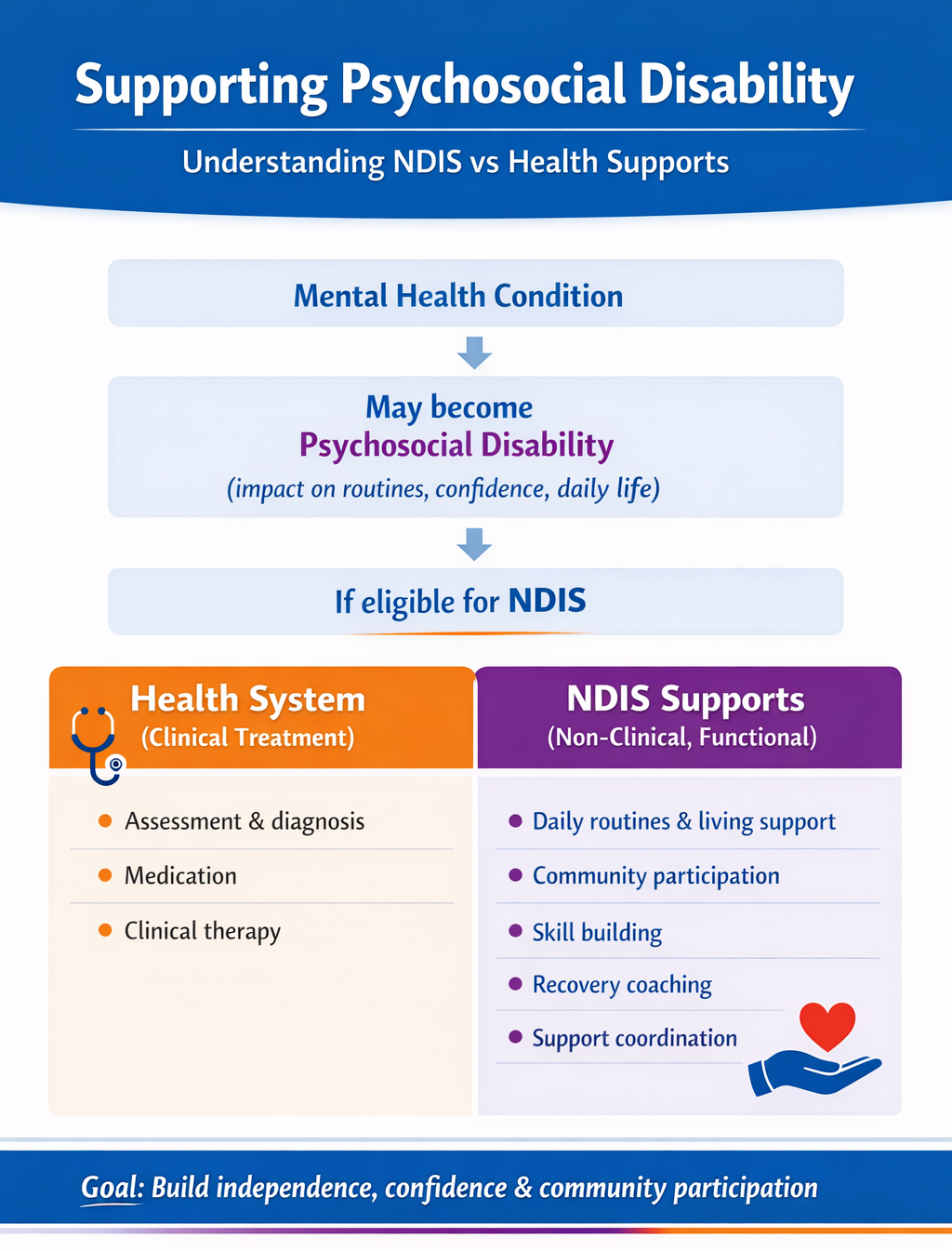
Not everyone who has a mental health condition will experience psychosocial disability, and not everyone with a mental health condition will be eligible for the NDIS. When someone is eligible, the NDIS funds supports that build functional ability and day-to-day participation.
What psychosocial disability can look like day to day
People may face difficulty maintaining routines, social withdrawal, anxiety in unfamiliar settings, and periods of increased support needs during relapse or major stress. [36]
What the NDIS can fund (in plain language)
Clear boundaries help people get the right help from the right system
For eligible participants, psychosocial disability supports funded by the NDIS are generally non-clinical and focused on functional ability and participation.
Depending on the person’s plan and goals, this can include support worker help with routines and community access, capacity-building supports for skills, and coordination supports. Some participants may also have a Psychosocial Recovery Coach, an NDIS-funded role intended to support recovery-oriented planning and engagement through changing support needs.
Clinical mental health treatment (assessment, diagnosis, and treatment) sits with the health system rather than the NDIS.
Why community connection matters
Long periods of isolation can make daily life harder. National reporting shows people with disability experience higher rates of loneliness and social isolation than people without disability.
Community participation here is not about forcing someone to be outgoing. It’s about creating opportunities to belong, practice skills, and rebuild confidence in real settings.
Small steps that build functional skills
Useful small-step goals can include a short walk at a consistent time, practicing a simple shopping routine, or attending a small group for 20 minutes with a clear leaving plan.
A short example
Aiden feels overwhelmed in busy places and avoids leaving home. The first goal isn’t “join a group.” It’s “leave the house and return safely with confidence.” With support, Aiden builds a consistent routine, then progresses to a small, structured group based around an interest.
What support workers can do well in this space
Psychosocial disability support often works best when it is consistent, calm, and predictable, with participant choice guiding pace and goals. These principles also align with ethical expectations that providers respect rights, privacy, and safe service delivery.
Families and supporters: a few practical tips
Keep goals small and measurable, track patterns, and ask supports to document what strategies are working. That improves consistency and strengthens planning conversations.
Where OptimumCare Plus fits
OptimumCare Plus supports participants with psychosocial disability to build routines, reconnect with community life, and strengthen practical skills at a pace that feels safe.
General information only: This article is not clinical advice. For NDIS funding questions, check current NDIA guidance and speak with your planning team.