SIL vs Short Term Respite vs MTA in the NDIS

Home and living supports help match the right support to the right setting.
NDIS housing and “time away” supports can feel confusing, especially when you hear a lot of acronyms. SIL, STA, and MTA often get talked about together, but they solve different problems and they’re funded in different ways.
One quick update: the NDIA now uses “short term respite” in current guidance for what many people still call Short Term Accommodation (STA). You may still see STA in older plans and in everyday conversation.
Supported Independent Living (SIL)
SIL is an NDIS support for people who need regular help (sometimes including overnight) with daily tasks so they can live as independently as possible.
SIL is not “rent” or “housing.” Participants usually pay normal living costs like rent, groceries, utilities, and personal spending. The NDIS funding is for the support provided in the home, typically based on an agreed roster of care.
Short term respite (formerly called STA)
Short term respite is funding for support and accommodation for a short time away from a person’s usual home, used to support the participant and give informal supports a break.
Participants still pay everyday expenses that anyone would pay. NDIS funding is not usually used for general leisure costs like tickets or paid experiences that aren’t linked to disability support needs.
Medium Term Accommodation (MTA)
MTA is temporary accommodation support intended for people who need a stable place to live for a short period while they’re waiting for a longer-term housing solution. It has eligibility rules and time limits, and it is not meant to be a long-term housing option.
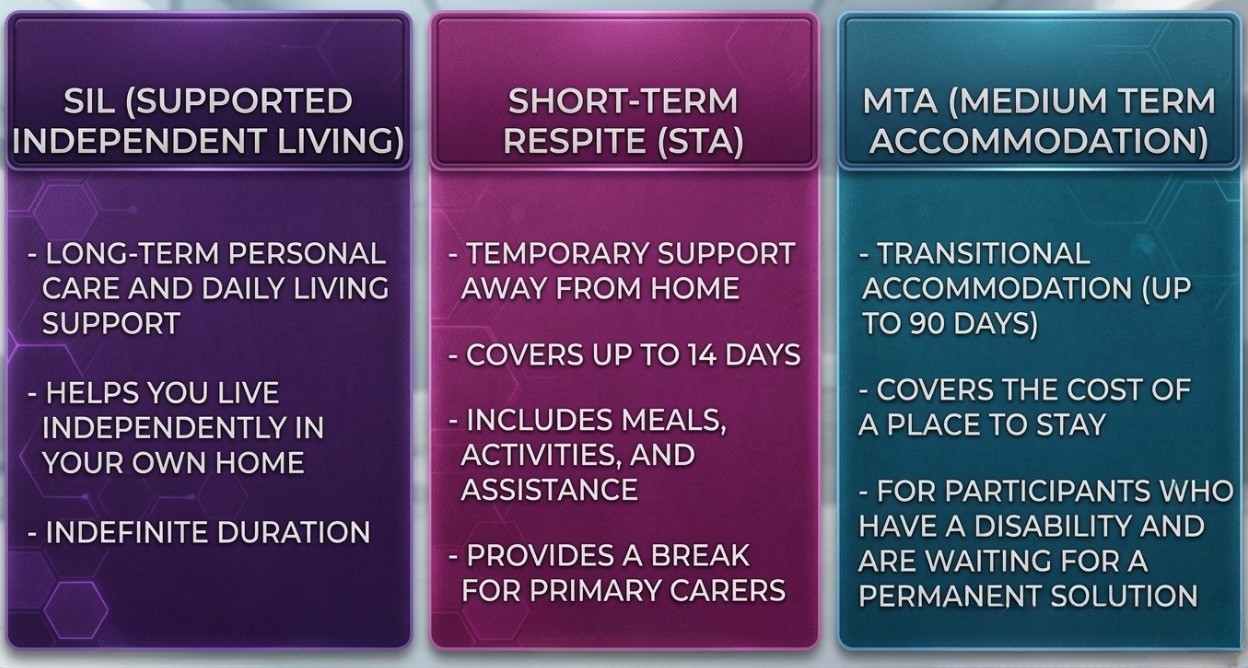
Different supports solve different problems.
How to decide which option fits
If the main need is daily support at home over the long term, SIL might be relevant. If the main need is a short break in usual care arrangements while still being supported, short term respite may fit. If the main need is temporary housing during a transition, MTA may be the right pathway.
Questions that help families get clear
What is the primary goal: daily living support, a short break, or temporary housing? What risks need to be managed? What evidence is available (OT reports, functional assessments, discharge information)? How does the request link to goals and “reasonable and necessary” rules?
Where OptimumCare Plus fits
A good provider can help you understand what each support is for, what evidence is usually needed, and how to match supports to goals without overpromising what the NDIS will fund.
General information only: NDIS supports and eligibility differ between participants and can change. Check current NDIA guidance and speak with your planning team.