Supporting Participants After Hospital Discharge: What Families Need to Know

The weeks after discharge often require extra planning and support
Leaving hospital is often only the first step. The weeks after discharge can bring changed mobility, new equipment, and higher support needs at home.
How the NDIS can help with discharge
The NDIA recognizes some participants may need extra supports to leave hospital quickly and safely, including short to medium term interim planning and additional supports in some circumstances.
Common challenges
Families often see reduced mobility, transfers support needs, fatigue, changed home setup, and increased personal care needs.
NDIS supports versus health supports
Clinical treatment and hospital care sits with the health system. The NDIS funds disability-related supports that help day-to-day functioning and goals, and it is not designed to fund supports more appropriately funded by health (assessment, diagnosis, treatment).
What NDIS-funded supports might look like
Depending on the plan: daily living assistance, safe routine setup, household help during recovery, support coordination, and transport supports where funded and linked to disability needs.
In some situations, MTA may be relevant if a person can’t return home safely yet and is eligible under NDIA rules.
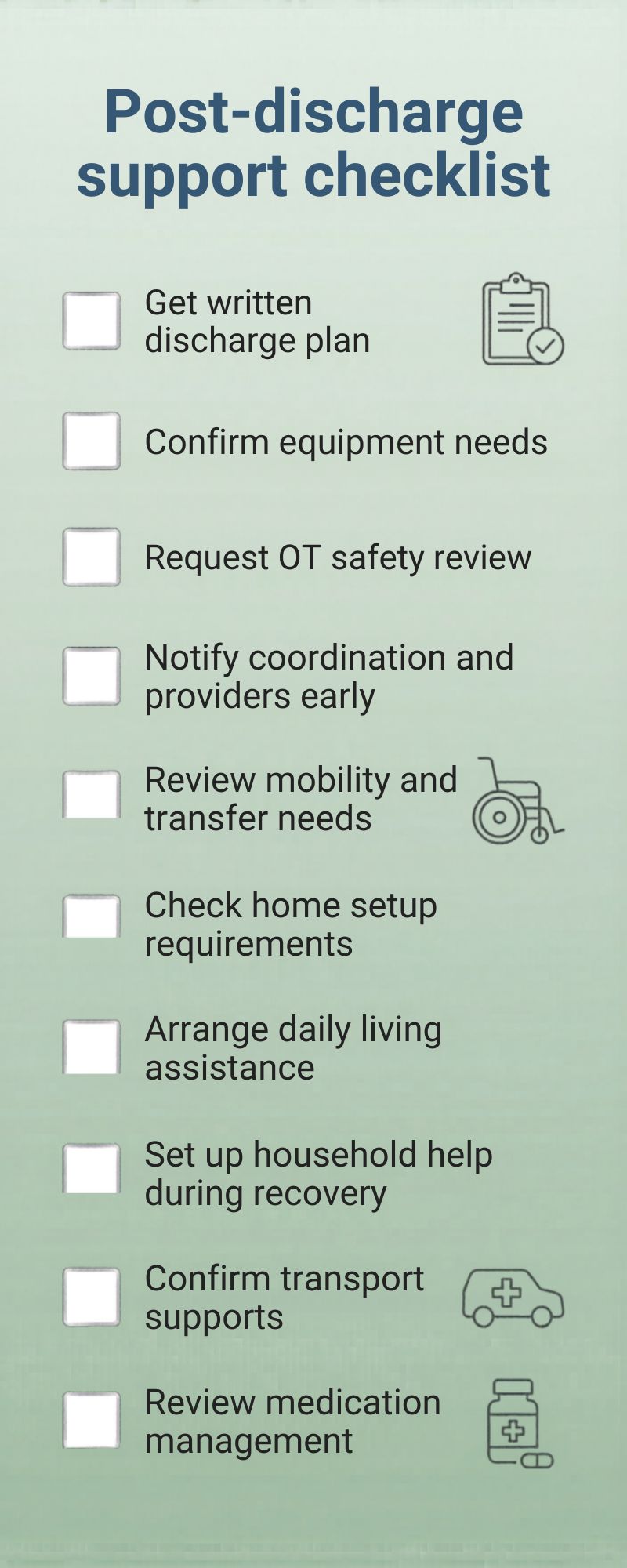
Practical discharge checklist
Before discharge: get a written discharge plan, confirm equipment, request OT safety review where needed, notify coordination/providers early. NDIS Commission guidance also emphasizes managing health and medication information during transitions of care.
Where OptimumCare Plus fits
OptimumCare Plus works with families and health teams to support safe routines and a practical transition home.
General information only: Transitions involve multiple systems. Check current NDIA guidance and speak with your planning team. For urgent health concerns, contact a health professional or emergency services.